
Keyword Cannibalization in SEO: The Proven 2026 Pillar Guide to Stronger Rankings
Many sites publish more pages and still lose clicks. Often, the cause is simple: two pages chase one search. Keyword cannibalization in SEO describes that internal contest, and it quietly drains your traffic.
Here is how it works. Several URLs on your site target the same query and the same intent. As a result, Google cannot pick a clear winner. Rankings flip, links split, and conversions fall.
This pillar guide shows you how to spot the problem, fix it, and prevent it. Each section also links to a deeper Skyline SEO cluster guide, so you can go further at your own pace.
We wrote it for business owners, content leads, and SEO managers. Moreover, every step uses free tools. You can start today.
Executive Summary
- Cannibalization is about shared intent, not shared words.
- Google Search Console finds most cases for free.
- Merge, differentiate, canonicalize, relink, or retitle. Pick one fix per case.
- A keyword ownership sheet prevents repeat problems.
- Allow four to eight weeks before you judge results.
Table of Contents
ToggleWhat Keyword Cannibalization in SEO Really Means
Keyword cannibalization in SEO happens when two or more pages on one site compete for the same query. Both pages promise the same answer. Therefore, Google has to guess which page deserves the top spot.
Intent is the key word here. Two pages can share a phrase and still serve different needs. For instance, a buying guide and a product page often answer different questions. That overlap is healthy.
Ahrefs makes the same point. Real problems appear when pages target the same keywords and satisfy very similar intent. You can read the full explanation in the Ahrefs guide to keyword cannibalization.
Keyword Cannibalization in SEO Versus Duplicate Content
Duplicate content means two URLs show near identical text. Cannibalization is wider than that. The pages may use different words, yet they still answer the same question. So you can have the problem without one copied sentence.
Think of two shop assistants who give the same advice at the same till. The customer feels confused. Meanwhile, the manager cannot tell who made the sale.
When Overlap Is Harmless
Not every overlap needs action. A news post and an evergreen guide may rank together, and both may earn clicks. Act only when the overlap costs you rankings, clicks, or sales.
- Both pages rank on page one and earn steady clicks.
- The pages serve clearly different intent.
- Rankings stay stable for several months.
Why Content Cannibalisation Hurts Rankings and Revenue
Content cannibalisation harms you in four quiet ways. First, link equity splits across several URLs. Second, click signals scatter. Third, Google may swap the ranking page week to week. Finally, the wrong page may win, so visitors land where they cannot buy.
What the 2026 Numbers Say
Clicks are already scarce. In February 2026, Ahrefs published a study of 300,000 keywords. It found that AI Overviews cut click through rate (CTR) for the top result by 58 percent. The figure uses December 2025 data. See the Ahrefs AI Overviews click study for the method.
Treat that number as a directional signal, not a promise. Your own Search Console data matters more. Still, the lesson is plain. With fewer clicks to share, a split ranking costs more than before.
Imagine two pages at positions four and nine. Neither earns a strong share. In contrast, one merged page could hold position three and collect far more clicks. That is the business case for action.
The U.S. Signal: Google Limits Repeat Listings
Google, a U.S. company, announced a site diversity change in June 2019. The company aims to show no more than two listings from one domain in top results. However, exceptions exist, such as branded searches.
The U.S. publication Search Engine Journal reported early data after launch. Only 3.5 percent of searches showed three URLs from one domain, down from 6.7 percent. In addition, about 44.2 percent showed two URLs, and 52.3 percent showed unique domains in every position. Read the Search Engine Journal report.
These numbers date from 2019, but the principle still shapes results. Moz tested 10,000 keywords and called the change small. Branded and navigational queries still return many listings from one site. For everything else, your third and fourth pages waste effort.
The CRO Angle: Wrong Page, Lost Sale
CRO keyword cannibalisation deserves its own mention. Suppose a blog post outranks your service page for a buying phrase. Visitors read the post and leave. Consequently, the page built to convert never gets the chance.
The fix starts with page roles. Service pages own buying phrases. Blog posts own research phrases. Our guide to an SEO strategy for service businesses explains how to assign them.
Keyword Cannibalization in SEO: Examples From Three Site Types
Rules are easy to forget, while examples stick. The scenarios below are illustrative, not client data. They show how the problem looks on service sites, online shops, and blogs.
Example One: A Service Page and a Blog Post
Picture a plumbing company in Texas. It has a service page for “emergency plumber Dallas” and a blog post with a near identical title. Both pages target the same phrase. Google swaps them every few weeks.
The service page should own the buying phrase. Then the blog post can own a helpful question, such as how to spot a burst pipe.
Example Two: A Category Page Versus a Buying Guide
An online shop sells running shoes. Its category page and its buying guide both target “best running shoes”. The category page suits shoppers, whereas the guide suits researchers. Each page must signal its purpose in the title and first paragraph.
Phrase research helps here. Read the beginner guide to keywords for ecommerce to separate shopper phrases from research phrases.
Example Three: Five Posts on One Topic
A marketing blog publishes five posts called “SEO tips”, “SEO advice”, “SEO basics”, “SEO ideas”, and “SEO hacks”. Each post repeats the same points. As a result, none earns a strong position. One strong guide would beat all five.

A Worked Example of Keyword Cannibalization in SEO
Here is a short walk through. We invented these numbers for teaching. Suppose Page A has 1,200 impressions, 14 clicks, and an average position of 8.4 for one query. Page B has 900 impressions, 11 clicks, and position 11.2.
Together they hold 2,100 impressions and 25 clicks. That is a click rate near 1.2 percent. Both pages sit below page one strength. Because the intent matches, the pair is a true conflict.
Next, you merge Page B into Page A, redirect B, and refresh A. If the merged page reaches position four, expect a much higher click rate. Track it for eight weeks, and record the before and after in a simple sheet.
Find Keyword Cannibalization in SEO: Checker Methods
You cannot repair what you cannot see. So start with free data, then add paid tools if the site is large. A good keyword cannibalization checker does one job. It shows multiple URLs ranking for one query.
Method One: Google Search Console (Free)
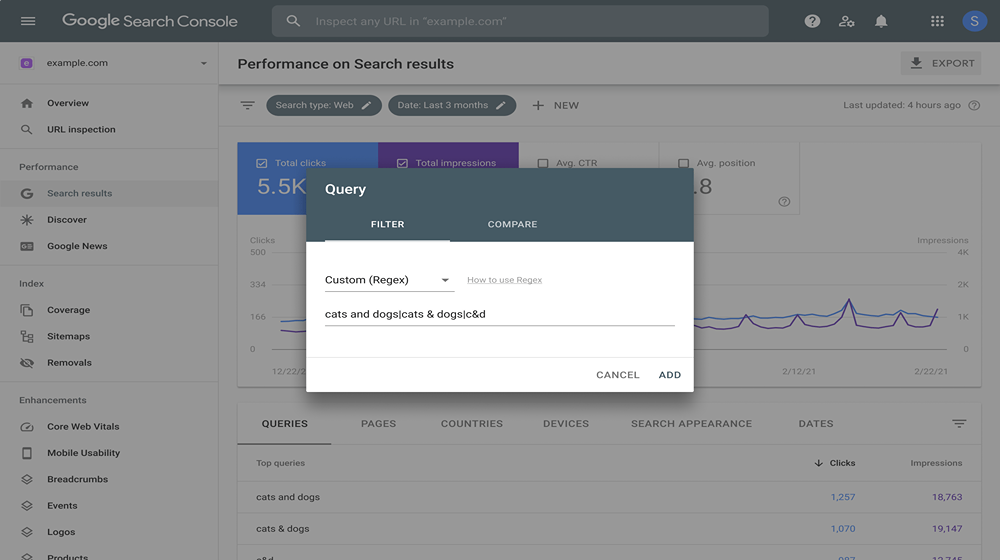
- Open Search Console and choose Performance, then Search results.
- Set the date range to the last three months.
- Add a Query filter and enter your target phrase.
- Open the Pages tab and note every URL that appears.
- Compare clicks, impressions, and average position for each URL.
Two or more URLs with real impressions for one query is a flag. Next, read the live results. Then confirm the intent matches before you act.
Method Two: Spot Keyword Cannibalization in SEO With a Tool
Paid platforms save time on large sites. In Ahrefs, open Site Explorer, choose Organic keywords, and switch on multiple URLs only. Then study the ranking history for URLs that swap places. That pattern often signals a real problem.
Semrush, Sitebulb, and similar suites offer comparable reports. Likewise, a spreadsheet export with a pivot table works well. After all, any keyword cannibalization tool is only as good as the review habit behind it.
Method Three: A Quick Site Search and a Full Audit
Type site:yourdomain.com followed by your phrase in quotation marks. Then count the pages that appear. Many close matches suggest overlap. This test is rough, but it takes one minute.
For a deeper view, run a full audit. Our guide on how to conduct an SEO audit covers the crawl steps. Additionally, a technical SEO review catches duplicate titles and canonical errors.
Warning Signs to Watch
- Rankings swap between two URLs from week to week.
- Impressions run high while clicks stay low.
- The wrong page ranks for a commercial query.
- Two title tags look almost identical.
- Internal links use the same anchor text for different URLs.
Score Each Case Before You Act
Signal | Priority | Suggested response |
Same intent, both pages rank 4 to 20 | High | Merge or differentiate now |
Same intent, one page far ahead | Medium | Relink to the winner |
Different intent, shared phrase | Low | Monitor only |
Thin page ranks for a money query | High | Merge into the strong page |
How to Fix Keyword Cannibalization in SEO: Five Moves
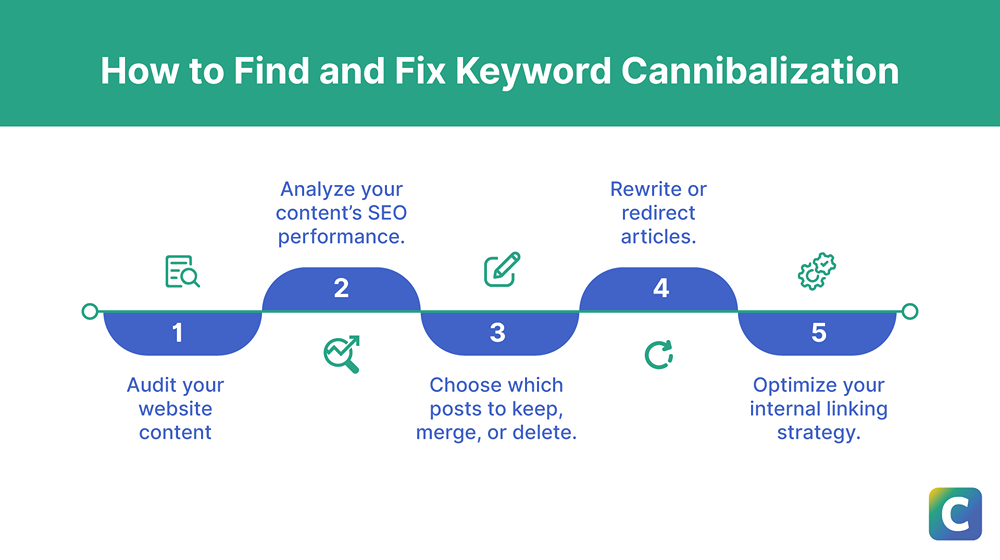
Now you can fix the problem without guesswork. First, choose one winner for each query. Then pick one of five moves. Match the move to the situation, not to habit.
Situation | Best move | Risk if ignored |
Two pages say nearly the same thing | Merge and redirect | Split links and rotating ranks |
Pages share a phrase but not a need | Differentiate intent | Muddy titles and weak clicks |
Both pages must stay live | Canonical or noindex | Google picks the wrong URL |
Anchors point to many pages | Rewire internal links | Mixed signals about the winner |
Titles repeat across pages | Retitle and rescope | Lower click rate |
Move One: Merge and Redirect
Merging works when two pages say almost the same thing. Choose the stronger URL by links, traffic, and age. Once you’ve chosen the page that should rank, point your other related pages to it. Our internal linking strategy example, with a map, template and 90-day plan, shows how to do this without creating new overlap. Then move the best sections across, and add a 301 redirect from the weaker URL to the winner.
However, be careful. Ahrefs warns that merging or deleting a page can cost you other rankings. Check every query the old URL earns first. If a page has no value, content pruning explains when removal is the better choice.
Move Two: Differentiate Search Intent
Sometimes both pages deserve to live. In that case, give each a separate job. One page answers what the topic means, while the other explains how to do it. Change the title, the H1, and the opening paragraph so the split is obvious.
Narrower phrases help. The benefits of long tail keywords show up here, because each page can own a specific question. Strong SEO copywriting then makes the split clear to readers.
Move Three: Canonicalize or Noindex
Use a canonical tag when near duplicates must stay live, such as filtered shop pages. Use noindex for thin utility pages. Remember that a canonical tag is a strong hint, not a command. Google may still choose differently.
Move Four: Rewire Internal Links
Anchor text tells Google which page you mean. Point every anchor for the target phrase to the winner. Then remove anchors that send the same phrase elsewhere. This is the cheapest repair, so try it first.
Move Five: Retitle and Rescope
Give every page a unique title tag and H1. Move secondary phrases to the pages that should own them. Our guide to on page SEO page titles explains length and wording.
A browser tool speeds this up. Read how to install and use SEO Meta in 1 Click. It reviews titles and headings in seconds.
What Not to Do
- Never delete pages that hold strong backlinks.
- Avoid noindex on pages that still earn traffic.
- Change one thing at a time. Otherwise, you will not know what worked.
Resolve Internal Keyword Cannibalization in SEO With a Hub and Cluster Map
Internal keyword cannibalization often grows from good intentions. Teams publish many related posts without a map. A hub and cluster structure solves that. The hub owns the broad phrase, and each cluster page owns one narrow phrase.
This page is your pillar. It owns the broad topic, while the cluster guides near the end own the narrow ones. Thus, a hub map handles the problem at scale.
Writers in the UK and Australia often search for internal keyword cannibalisation with the British spelling. Treat both spellings as one topic. Do not publish two pages to cover them.
Build the Map in Four Steps
- List every URL that targets the topic.
- Assign one primary phrase to each URL.
- Mark the hub page and link every cluster page to it.
- Link back from the hub with descriptive anchor text.
Follow the basics too. Our on page SEO best practices cover headings, URLs, and internal links that support a clean map.
Prevent Keyword Cannibalization in SEO Before You Publish
Fixing problems helps, but prevention costs less. To prevent keyword cannibalization, treat each keyword like a parking space. One car takes one space, and everyone else parks elsewhere.
Build a Keyword Cannibalization Template
We call our version the Intent Ownership Matrix. It is a simple sheet with five columns. Review it before every new brief. It takes two minutes, yet it saves weeks of cleanup.
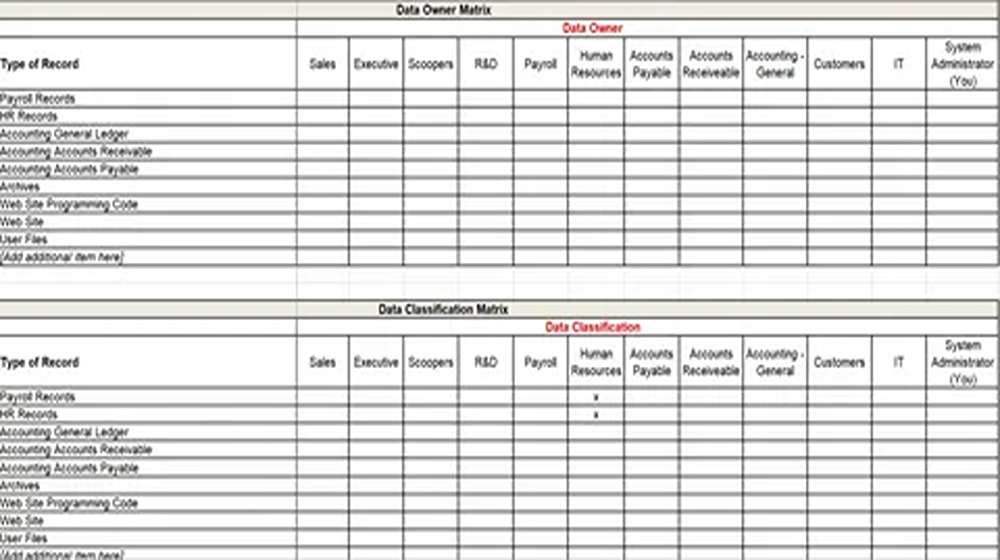
Primary keyword | Intent | Owner URL | Support URLs | Reviewed |
Example phrase A | Informational | Guide A | Posts B and C | Q4 2026 |
Example phrase B | Commercial | Category B | Blog B | Q4 2026 |
Run a Pre Publish Checklist
- Search your own site for the target phrase.
- Check Search Console for existing impressions.
- Read the top five results and name the dominant intent.
- Confirm that no other URL owns that intent.
- Add the new page to the ownership sheet.
Writers can apply this during drafting. Read how to write an SEO friendly blog post and add the ownership check as step one. If you need help at volume, an SEO content writing agency can follow the same sheet.
Set a Review Rhythm
Audit large sites once a quarter and small sites twice a year. Review again after any big content push. Early fixes are easier than repairs after dozens of similar URLs pile up.
A Half Hour Monthly Routine
- Export new queries from Search Console.
- Flag any query with two or more URLs.
- Check intent for each flagged pair.
- Log the chosen fix in the sheet.
Link Equity: Where Outreach Fits
Cannibalization also affects backlinks. If outside sites link to the losing page, that value stays split. Redirects pass most of it to the winner, but only when you merge correctly.
Plan your outreach around the winning URL. Our guide to SEO outreach and how to start it explains how to pitch the right page. In this way, every new link strengthens one target.
Recovery Timeline and Monitoring
After a fix, Google needs time to crawl and reassess. Allow four to eight weeks before you judge results. This is a planning estimate from common practice, not a Google promise.
Track four numbers each week. Watch clicks to the winning page, average position, the count of ranking URLs per query, and conversions. When URL counts fall and clicks rise, the repair has worked.
Why EEAT Matters for Keyword Cannibalization in SEO
Experience, expertise, authority, and trust all apply here. Document your tests, and show who wrote the advice. Cite the sources you checked. Update dates when facts change. Readers and search engines reward that care.
Consolidation also lifts quality. One strong page beats three thin ones, because it leaves room for original data, clear examples, and a named author. Read more in our guide to understanding EEAT in SEO.
Cluster Map: Your Next Reads
Use this table to go deeper. Each cluster guide supports one part of this pillar.
Cluster guide | How it helps |
Assign service pages and blog posts by intent | |
Separate shopper phrases from research phrases | |
Find overlapping pages at scale | |
Fix canonicals and duplicate titles | |
Remove or merge weak pages safely | |
Give each page a narrow phrase | |
Write unique titles for every URL | |
Keep headings and links consistent | |
Check ownership before drafting | |
Point new links to the winning page | |
Build trust into consolidated pages |
Key Takeaways on Keyword Cannibalization in SEO
Here is the short form. First, find pages that share intent. Next, choose one winner and apply the matching move. Finally, protect the result with a keyword ownership sheet.
- Intent, not wording, defines a true conflict.
- Search Console gives you free proof in minutes.
- Merge, differentiate, canonicalize, relink, or retitle.
- Prevention beats repair, so log every keyword before you publish.
- Measure for eight weeks and record the lift.
Your next step: pick one query today and open Search Console. If two URLs appear, apply the matching move this week. Need an expert eye on your site? Contact Skyline SEO for a content and keyword review, or browse more guides on the Skyline SEO blog.
Frequently Asked Questions
Can two of my pages rank on page one together?
Yes. Google often shows two listings from one site. That works well when each page serves a different need and both earn clicks.
Is keyword cannibalization in SEO a Google penalty?
No. It is a dilution problem, not a penalty. Your own pages split signals, so none reaches full potential.
Should I delete the weaker page?
Rarely. Deleting loses links and other rankings. Instead, merge and redirect, so the value moves to the winner.
Do product pages and blog posts compete?
Sometimes. A shop page and a guide may chase one commercial phrase. Give the shop page transactional wording, and give the guide informational wording.
How often should I audit my site?
Quarterly suits most teams. Also add a check after every large publishing push or site migration.
Do AI Overviews change the advice?
They raise the stakes. Fewer clicks are available, so each page must earn its place. One clear page per intent is the safest plan.