
Keyword Research for E-commerce USA | Beginner Guide
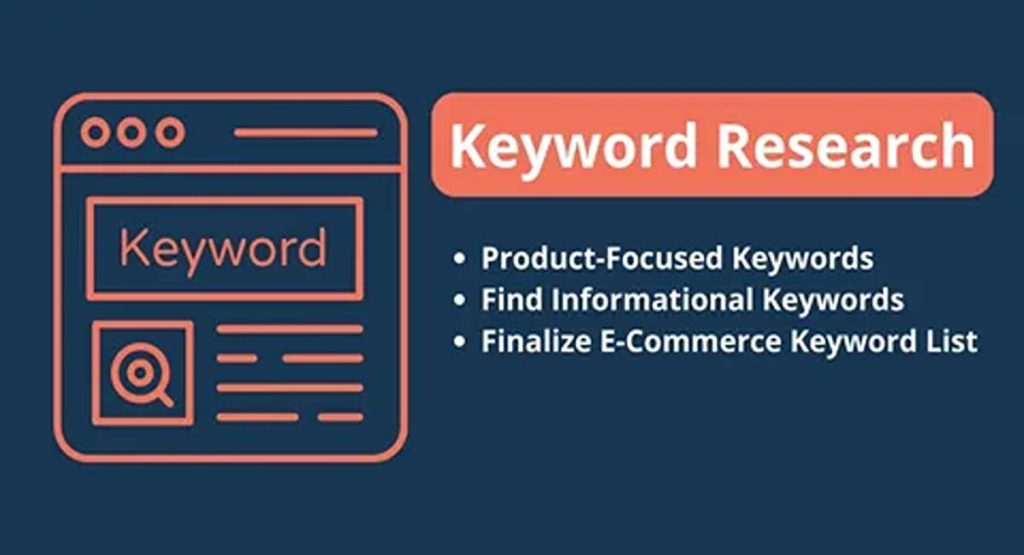
Most online stores in the USA struggle to rank, and weak products are rarely the real reason. In most cases, shoppers simply cannot find the store at all. Search engines connect a buyer to a store through one thing above all else. That connection point is the keyword. Mastering keyword research for e-commerce therefore builds the real foundation beneath sustainable traffic and revenue.
Search behavior has shifted sharply in recent years. Modern search engines now weigh intent, context, and topical authority, not just exact word matches. As a result, an online store needs a keyword strategy that mirrors the real path a customer actually walks.
Search still opens most shopping journeys, and AI powered results now shape a real share of the decisions that follow. That shift means keyword research is no longer a nice extra. It now functions as a genuine revenue strategy.
This guide walks through several core ideas. You will see how keyword research actually works inside the U.S. e-commerce market. Beyond that, you will learn which keyword types drive real purchases. Modern algorithms and their approach to keyword relevance come next, alongside practical examples and simple frameworks any beginner can apply right away.
If your store struggles with visibility today, this guide offers a clear starting point. In fact, learning how to do keyword research for ecommerce is exactly where that turnaround usually begins. Next, the fundamentals of e-commerce keyword research deserve a closer look.
Table of Contents
- What Is E-Commerce Keyword Research and How Does It Work
- Why Keyword Research Matters for SEO
- Getting Started with Keyword Research
- The Art of Keyword Selection
- Types of Keywords Every E-Commerce Store Needs
- Keyword Metrics Explained
- How to Prioritize Keywords for Maximum ROI
- Check the Keywords Your Website Already Ranks For
- Check the Keywords Your Competitors Rank For
- What Makes a Good Keyword for an E-Commerce Brand
- Things to Avoid in E-Commerce Keyword Research
- Global Stats and Market Trends 2026
- Latest Algorithm Signals Shaping Keyword Strategy
- Real E-Commerce Examples
- Frequently Asked Questions
- Final Thoughts
1. What Is E-Commerce Keyword Research and How Does It Work
Understanding this process is the real first step toward effective SEO for any online store.
E-commerce keyword research identifies the exact words a shopper types before making a purchase. Instead of guessing at customer behavior, a store studies real search demand through dedicated SEO tools and data signals.
In simple terms, keyword research connects four things in sequence. Customer intent leads to a search query. That query leads to a product page. The product page then leads to an actual purchase.
This process moves through four clear stages. First, a team discovers the exact terms customers already use. Second, that team studies competition and demand around those terms. Third, the team matches each keyword to a specific product or category page. Fourth, the team optimizes content to match that keyword properly.
Consider a simple example. A shopper researches best running shoes USA through a blog post. That same shopper then compares Nike vs Adidas running shoes through a guide. Finally, that shopper purchases through a page built around buy Nike Air Zoom USA.
How Semantic Search Changed Keyword Relevance
Modern SEO tools now evaluate semantic meaning as well as exact wording. Consequently, Google already understands closely related phrases without needing an exact match. As a result, keyword relevance matters far more than repeating a single word over and over.
Semantic search sits at the core of this shift. Rather than matching characters, the engine now interprets what a shopper actually means. AI search visibility services have grown around exactly this change, helping stores appear inside AI generated answers as well as traditional blue links.
Teams working with a professional optimization partner often start with structured planning, similar to the approach covered in Skyline SEO search engine optimization services, where keyword mapping aligns directly with the conversion funnel.
2. Why Keyword Research Matters for SEO
Keyword research delivers visibility, authority, and conversions together, all at once. Without it, even a beautifully designed store stays effectively invisible. High intent keywords tend to target shoppers who are already close to buying, so a smooth checkout experience matters just as much once that traffic actually arrives.
A few core benefits stand out clearly.
- It attracts qualified traffic, since the right keywords filter in shoppers already interested in a specific product.
- Conversion rates improve too, since transactional keywords often convert several times better than purely informational ones.
- Content creation gets easier, since real keywords reveal genuine customer questions and pain points.
- Finally, it supports AI search optimization, since modern search engines group related keywords into semantic clusters to understand a page topic.
U.S. e-commerce sales reached roughly 1.23 trillion dollars in 2025, based on the latest available government data, and organic search continues to drive a meaningful share of non paid traffic for online stores. Mastering keyword research for e-commerce therefore has a direct, measurable impact on real growth potential.
3. Getting Started with Keyword Research
Keyword research can feel overwhelming to a beginner at first glance. However, breaking the process into clear steps makes it genuinely manageable.
Step 1: Understand Your Audience
A few honest questions come first. Who actually buys your products. What real problem are they trying to solve. How do they naturally describe that product in their own words. Customer language almost always outperforms polished marketing language.
Step 2: Brainstorm Seed Keywords
Start with core product terms, such as running shoes, organic skincare, or gaming laptops. Then expand each term into several natural seed keyword variations.
Step 3: Use Keyword Research Tools
A handful of tools cover most of what a beginner needs. Google Keyword Planner, Ahrefs, Semrush, and Google Search Console all provide search volume, competition data, and trend information for a given term.
Step 4: Build Keyword Clusters
Instead of chasing single, isolated keywords, group related searches together into one cluster. This practice, known as semantic keyword clustering, might combine best wireless headphones USA, wireless headphones under 200 dollars, and noise cancelling headphones USA all at once.
Building real semantic content volume around a single topic also signals genuine depth to a search engine. A cluster of eight connected pages almost always outranks one thin page covering the same ground.
Cluster strategies like this often get built into a professional content framework, similar to the approach used inside Skyline SEO content writing services, to keep semantic depth consistent across an entire site.

4.The Art of Keyword Selection
Choosing the right keyword involves both analysis and genuine creativity. Numbers matter, yet real intent matters even more in the final decision.
A strong keyword balances four things at once. Search demand needs to exist. Buyer intent needs to point toward a purchase. Ranking feasibility needs to stay realistic. Business relevance needs to stay tight.
A simple selection framework helps here. Volume should sit at a moderate to high level. Competition should stay medium or genuinely achievable. Intent should lean commercial or transactional. Relevance should match the actual product directly.
Beginners often gravitate toward high volume keywords first. However, a long tail keyword frequently produces faster rankings and far more qualified traffic in practice.
Compare shoes, which sits at an extremely competitive level, against best trail running shoes USA beginners, which stays achievable and tightly targeted. This exact principle sits at the center of any solid keyword strategy, where precision consistently beats raw popularity.
A useful habit here involves checking search intent directly inside Google before committing to any single term. Typing the keyword into Google and studying the actual results reveals whether shoppers expect a blog post, a comparison page, or a direct product listing. Matching that expectation exactly tends to matter more than any single metric on its own.
5. Types of Keywords Every E-Commerce Store Needs
A successful store combines several keyword types rather than relying on just one.
- Informational keywords appear inside blogs and guides, such as how to choose hiking boots. A single informational keyword rarely drives a sale on its own, yet it opens the relationship.
- Commercial keywords appear when a shopper compares options, such as best hiking boots USA. These commercial terms signal that a decision is getting close.
- Transactional keywords appear once a shopper is ready to buy, such as buy hiking boots online in the USA.
- Navigational search happens during a direct brand lookup, such as Nike official store USA.
- A medium tail keyword often sits between these types, offering more volume than a long tail phrase while staying easier than a broad head term.
Each type maps to a different funnel stage. Informational content drives early awareness and raw traffic. Commercial content drives consideration and genuine engagement. Transactional content drives the final purchase and real sales. A balanced mix across all three stages keeps traffic growth steady over time.
6. Keyword Metrics Explained
Understanding core metrics prevents most poor keyword decisions before they happen.
- Search volume shows the average monthly searches for a term. Anyone asking what is search volume can think of it simply as raw demand, and high demand usually signals heavier competition too.
- Keyword difficulty shows how hard ranking for that term will actually be. Beginners should generally target a low to medium difficulty score. Backlink strength and keyword difficulty move closely together, since a term dominated by high authority domains stays hard regardless of writing quality. Content quality and keyword difficulty interact the same way, because a weak page rarely displaces a genuinely thorough one.
- Click through rate shows how likely a real searcher is to click a given result. The formula for click through rate stays simple, clicks divided by impressions, then multiplied by one hundred.
- Search intent remains the single most important metric inside modern SEO. It tells you exactly what a searcher actually wants.
- Trend data shows how seasonal shifts affect a given keyword over the course of a year. Understanding what a trend in data actually represents helps a store plan stock and content around real demand curves. Reading data trends properly separates a seasonal spike from genuine, lasting growth.
A workable target range looks something like this. Volume between 500 and 5,000. Difficulty under 40. Click through rate above 3 percent. Intent squarely commercial. Google’s recent Helpful Content guidance also emphasizes real intent alignment over any form of keyword stuffing.

7. How to Prioritize Keywords for Maximum ROI
Not every keyword deserves equal attention or equal effort.
A simple priority formula helps here. Business value, plus intent, plus ranking probability, together determine true priority.
High priority keywords tend to be product focused, low competition, and backed by real buying intent. Medium priority keywords usually sit inside comparison content. Low priority keywords tend to be generic, purely informational terms with little direct commercial value.
Stores scaling an SEO campaign often coordinate this exact prioritization with paid campaigns too, similar to the combined planning described inside Skyline SEO Google Ads services.
8. Check the Keywords Your Website Already Ranks For
Before chasing brand new keywords, a smart team studies its existing rankings first.
Google Search Console reveals three things clearly. Keywords already generating impressions. Pages sitting on page two that almost rank. Queries already showing strong click through potential.
A few simple optimization steps follow naturally from there. Update the existing content. Improve the heading structure. Add relevant semantic keywords throughout. Strengthen internal linking between related pages, alongside a full SEO audit run on a regular schedule.
Even a small update here can meaningfully improve rankings. Many stores ignore this exact opportunity entirely, even though it tends to produce some of the fastest wins available in SEO.
9. Check the Keywords Your Competitors Rank For
Competitor analysis regularly reveals opportunities a store would otherwise miss entirely.
The process follows four clear steps. Identify the real top competitors first. Analyze exactly which keywords they already rank for. Find the clear gaps between their coverage and yours. Build genuinely improved content to fill each gap.
A simple gap analysis example makes this concrete. Take a term like best gym shoes USA, which might show no real ranking at all and signals a clear opportunity to build a fresh guide. Compare that with affordable sneakers USA, which might already sit on page two and signals an opportunity to optimize an existing page instead. Competitive keyword research turns SEO from guesswork into a repeatable, real strategy.
10. What Makes a Good Keyword for an E-Commerce Brand
A keyword only becomes genuinely valuable once it actually supports a real business goal.
Several clear traits separate a strong keyword from a weak one. It matches the actual product offering directly. Real buyer intent shows up clearly too. Measurable, real demand also needs to exist. Long term topical authority across the site rounds out the list.
A good keyword answers a real customer question clearly, and it also aligns naturally with overall brand positioning. For instance, a premium brand should chase quality focused searches rather than pure price based ones. Many beginners skip this exact judgment call, and that single oversight tends to cause repeated, costly mistakes later, undermining the E-E-A-T signals a store otherwise builds.
11. Things to Avoid in E-Commerce Keyword Research
A handful of avoidable mistakes repeat constantly across new stores.
- Keyword stuffing draws a direct penalty, since modern algorithms actively flag unnatural repetition. Anyone wondering what keyword stuffing in SEO actually looks like can picture the same phrase forced into every second sentence. Classic keyword stuffing examples include hidden text, repeated product names in a footer, and a meta description packed with the same term four times over.
- Ignoring intent wastes real resources, since traffic without conversion helps nobody.
- Chasing only high volume terms slows growth, since fierce competition eats up time and budget.
- Skipping internal linking confuses search engines, since crawlers struggle to understand a disconnected site structure.
- Duplicate product content creates a recurring problem, especially across larger e-commerce catalogs.
Building structured internal links between key pages, such as the Skyline SEO homepage and the Skyline SEO blog, strengthens topical authority and improves crawlability across an entire site.
12. Global Stats and Market Trends 2026
Two verified, current data points anchor just how much keyword strategy actually matters heading into 2026.
Backlinko’s own analysis of more than 306 million keywords found that 91.8 percent of all search queries qualify as long tail terms, though those same long tail terms account for only about 3.3 percent of total search volume combined. That gap explains exactly why so many individually small, specific keywords still add up to a serious traffic opportunity for a patient store.
Meanwhile, the U.S. Census Bureau reported that total U.S. retail e-commerce sales reached roughly 1.2337 trillion dollars across 2025, a 5.4 percent increase over the prior year, with e-commerce now representing 16.4 percent of all retail sales nationally. That scale alone explains why even a small keyword driven ranking gain can translate into real, measurable revenue.

13. Latest Algorithm Signals Shaping Keyword Strategy
Search algorithms have evolved quickly across the past two years, and several shifts now directly affect keyword strategy.
- AI Overview integration means Google increasingly summarizes results directly inside the search page itself. A page still needs genuine expertise and clarity to earn a place inside that summary.
- The expanding Helpful Content system continues to reward sites built on real, first hand experience over generic, AI generated filler.
- E-E-A-T signals, meaning experience, expertise, authority, and trust, now carry real, measurable weight inside ranking decisions. Knowing how to improve E-E-A-T for better rankings now comes down to showing real authorship, real testing, and real citations.
- Entity and semantic matching means Google increasingly understands real context rather than just matching exact words on a page. These semantic rules reward a page that covers a topic properly over one that merely repeats a phrase.
Long form, well structured content continues to align cleanly with this overall direction, which is exactly why a comprehensive guide like this one, built on the same on-page SEO and image optimization principles, still performs well against short, thin alternatives.
14. Real E-Commerce Examples
A couple of simplified examples show what this looks like once applied in practice.
An apparel store targeted specific, long tail transactional keywords and built out detailed category guides around each one. Organic traffic for that store grew substantially within roughly nine months.
An electronics brand ran a full competitor keyword gap analysis and then optimized its existing pages around the gaps it found. Conversion rate for that brand improved meaningfully within a similar window.
Growth like this correlates directly with a structured, patient keyword implementation process, not a one time burst of random content. Neither store relied on a single viral post or a lucky ranking spike. Both instead followed the same repeatable cycle covered throughout this guide, research, clustering, content, and ongoing refinement, applied consistently over several months, backed by real SEO outreach to build authority alongside it.
15. Frequently Asked Questions
Q1. How long does keyword research take for a brand new store?
Foundational research and initial mapping typically takes one to two weeks for most new stores.
Q2. Can a small e-commerce store really compete with large, established brands?
Yes. A long tail keyword strategy lets a smaller, focused site rank faster inside a tighter niche.
Q3. Should one product page target several keywords at once?
A page can target a few related terms, but it should keep one clear, primary intent throughout.
Q4. How often should a keyword strategy get revisited?
Reviewing the full strategy every three to six months keeps it aligned with shifting search trends.
Q5. Do AI tools fully replace manual keyword research?
No. AI tools speed up analysis considerably, yet real strategy still needs genuine human judgment behind it.
16. Final Thoughts
Keyword research remains the real backbone behind successful e-commerce SEO. Modern strategy, however, demands more than a simple list of terms. A store must understand intent, semantic relevance, and genuine user experience together.
This guide showed how a beginner can discover genuinely profitable keywords, analyze competitors with real intelligence, and align content tightly with buyer intent. It also showed how a store can adapt to the algorithm shifts already reshaping 2025 and 2026, while building sustainable organic growth along the way.
Applied consistently, keyword optimization turns raw search visibility into predictable, compounding revenue growth over time.
Ready to grow e-commerce visibility inside the U.S. market. Start applying these exact strategies today. If you want expert help, explore the full range of services at Skyline SEO, or reach out directly to build a customized SEO roadmap for your own online store.