
SaaS Inbound Marketing Explained for the USA Market
SaaS inbound marketing draws customers in with useful content instead of interrupting them with ads. It answers real questions with clarity. Over time, this approach builds trust and brings in leads that already understand the product.
Outbound methods push a message at a cold audience. Inbound works the other way. It waits for a reader with a real problem, then meets that reader with a helpful answer. This difference matters even more in the U.S. market, where buyers research heavily before they ever speak with sales.
Content, SEO, and marketing automation work together inside a strong inbound program. Combined well, they create a growth model a team can predict. That model can repeat instead of depending on luck.
This guide breaks inbound marketing down into its core parts. It then shows how a SaaS team in the USA can put each part to work. See the wider approach on the Skyline SEO homepage.
Table of Contents
- What SaaS Inbound Marketing Really Means
- Why Inbound Outperforms Outbound for SaaS
- Core Elements of an Inbound Program
- Mapping the Buyer Journey
- Content Blueprint by Audience Segment
- SEO Foundations That Support Inbound
- Trial Activation and Conversion
- Lead Scoring and the Handoff to Sales
- Metrics That Actually Matter
- The Tech Stack Behind Scaled Inbound
- Backlinks and Outreach
- Team Structure for Inbound Execution
- A Sample Content Calendar and GTM Checklist
- Common Mistakes in Inbound Marketing
- How to Scale What Already Works
- Frequently Asked Questions
- Final Thoughts
1. What SaaS Inbound Marketing Really Means
Inbound marketing for SaaS centers on the customer, not the product pitch. It attracts buyers by solving a real problem through useful content instead of a hard sell.
Principles of inbound marketing fit the U.S. market well. American buyers tend to research a purchase thoroughly before they commit. Inbound captures that research phase directly, since it shows up right where a buyer already looks for answers.
Done well, inbound marketing raises lead quality. It also lowers churn. Buyers who arrive already informed tend to stay longer as customers.
2. Why Inbound Outperforms Outbound for SaaS
Why inbound beats outbound for SaaS comes down to one simple fact. Outbound can create quick awareness, but it rarely holds a reader attention for long.
Inbound builds relevance and trust over time instead. Content aligned with what a buyer already wants attracts genuinely interested prospects, not just cold names on a list.
Likewise, inbound channels also tend to lower the cost of each qualified lead. They improve return on investment at the same time. Clearer attribution and stronger trust both lift customer lifetime value as a result.
U.S. SaaS companies that invest in inbound marketing often see steadier growth. They also build stronger word of mouth among existing customers.
3. Core Elements of an Inbound Program
In fact, core elements of inbound marketing work together as one system, not as separate tactics.
- Content: whitepapers, blog posts, and case studies that show real expertise and speak to specific pain points.
- SEO: technical fixes and keyword work that match how U.S. buyers actually search.
- Lead magnets: eBooks, templates, and checklists built to attract a genuinely qualified prospect.
- Email nurture: sequences based on behavior, tailored to a reader role and industry.
- Product trials: a guided, low friction experience that leads a new user toward real value fast.
- Customer success: ongoing education that turns a paying user into an active promoter.
Each element supports the next one in the funnel. The guide on SaaS content marketing funnel strategy that converts shows how these pieces connect stage by stage.
4. Mapping the Buyer Journey
Mapping the buyer journey keeps every asset tied to a real stage in the funnel, not a guess.
Early stage content should answer a beginner question clearly. Evaluation stage content should compare options honestly, often through a case study or a detailed comparison. Decision stage content should remove friction, through a clear trial page or a simple pricing guide.
Behavior based automation moves a reader from one stage to the next. A well timed follow up email can shorten a sales cycle by a real margin.
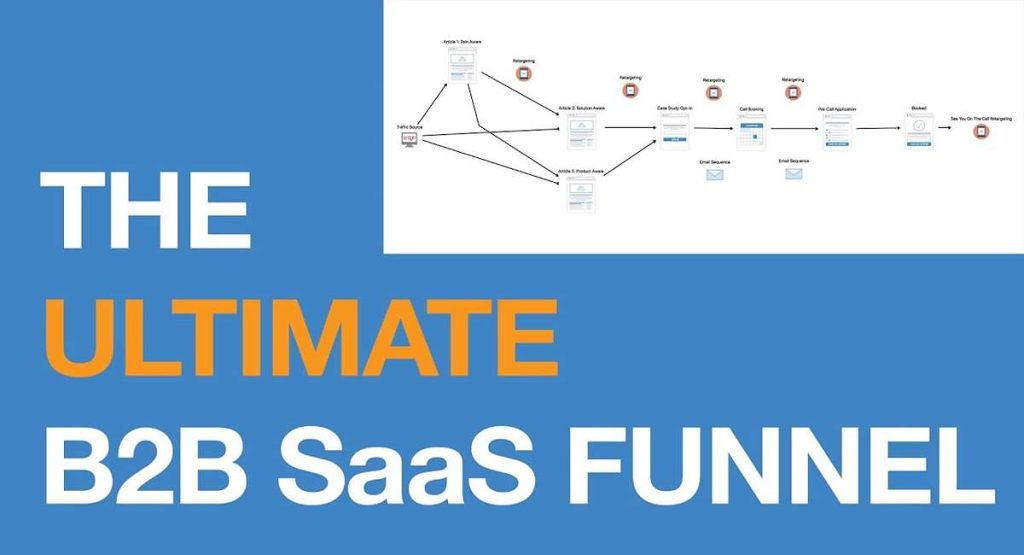
This same structure shows up in the inbound methodology used across most SaaS teams: attract, convert, close, and delight. Attract brings in the right traffic. Convert turns a visitor into a lead. Close turns a lead into a customer. Delight keeps that customer around long after the sale.
5. Content Blueprint by Audience Segment
A clear content blueprint speaks to three different readers at once: the end user, the technical buyer, and the executive.
For the end user working through a specific problem, a how to guide fits best. A comparison post, on the other hand, serves someone evaluating your product against a competitor. Meanwhile, a return on investment calculator speaks directly to a financial buyer weighing cost against benefit. In contrast, anyone who wants a fast answer usually reaches for a short video demo. Finally, a reader who wants a longer conversation turns to a webinar instead.
Mixing these formats across a single content calendar keeps every audience segment engaged at the stage where they actually stand.
6. SEO Foundations That Support Inbound
Strong SEO for SaaS inbound starts with keyword research built around real U.S. buyer intent, not guesswork.
Picking the right terms first prevents months of wasted writing later. See how to conduct keyword research for SaaS content for a full process.
A technical audit comes next. Site speed, crawlability, and clean markup all affect whether a page can rank at all. The guide on technical SEO for SaaS in the USA covers this layer in depth.
Internal linking and meta tag work then raise page authority further. See the SEO role in content strategy for SaaS companies to understand how SEO shapes a full content plan.
Track organic conversions, not just sessions. Traffic without a real outcome tells a team very little.
7. Trial Activation and Conversion
Trial activation decides whether a curious visitor ever becomes a paying customer. A smoother trial keeps far more people in the funnel.
Cutting unnecessary form fields removes an early barrier. A progressive profiling approach then gathers extra detail slowly, without overwhelming a brand new user.
In app guidance helps a new user reach the moment where the product truly clicks. Simple, relevant suggestions inside the product speed up that moment.
Early feedback from real trial users reveals where people quietly drop off. Heatmaps and session recordings often show the exact step that needs a fix.
8. Lead Scoring and the Handoff to Sales
Lead scoring turns raw activity into a clear signal sales can act on. In fact, a good model blends product usage with real intent signals. For instance, a lead scoring example might award points for a pricing visit, a feature trial, and a login.
Once a lead crosses a set score, an automated alert should reach the sales team right away. Giving a rep real context, like pages viewed and features tried, helps that rep personalize the very first outreach.
Clear alignment between marketing and sales keeps effort focused on the leads most likely to close. Effort does not spread thin across everyone.
A lead scoring template is worth building as a real, downloadable asset, not just a written explanation. Indeed, a reader searching that exact phrase wants a working sheet to fill in. As a result, a simple spreadsheet or one page template can turn this section into a genuine lead magnet.
9. Metrics That Actually Matter
In short, metrics that actually matter tie directly to business growth, not vanity numbers.
- Organic marketing qualified leads: leads that arrive through search and match a real buyer persona.
- Sales qualified lead rate: the share of marketing qualified leads that move into real sales conversations.
- Customer acquisition cost: what it actually costs to win one new customer.
- Lifetime value: what one customer is worth across the full relationship.
- Churn rate: how many customers leave within a given period.
- Trial to paid conversion rate: a direct read on how well onboarding actually works.
Reviewing these numbers regularly turns a content plan into a system a team can actually improve, month over month.
10. The Tech Stack Behind Scaled Inbound
An inbound tech stack keeps automation, personalization, and data working together, instead of scattered across five different tools.
- A content management system with real SEO support keeps content easy to publish and easy to find.
- Marketing automation handles email flows, lead nurture, and lead scoring without manual work.
- Analytics tools track real user behavior and campaign results, not just page views.
- A shared customer relationship management system keeps one clear view of every contact.
- Outreach and link building tools help a team track backlinks and manage outreach at scale.
Building this stack well often benefits from outside expertise. The SaaS digital marketing services page covers full support across this system.
11. Backlinks and Outreach
Indeed, a strong backlink strategy builds real authority in a niche over time, far beyond what content alone can do.
- Guest posts placed on respected industry sites.
- Resource page submissions that match the product closely.
- Original research shared publicly, which naturally earns citations from other sites.
- Direct outreach to journalists and industry writers covering the space.
Quality matters far more than quantity here. See the best 10 link building tactics for SaaS businesses for tactics that hold up over time.
12. Team Structure for Inbound Execution
Inbound marketing runs more smoothly when a clear team structure removes confusion over who owns what.
- A content team builds blog posts, case studies, and webinars.
- In addition, an SEO team handles keyword research plus on page and technical work.
- Meanwhile, a growth engineering team runs the tools behind automation and data.
- Finally, a customer success team keeps existing users engaged and renewing.
Regular planning between these teams keeps everyone aligned. Product launches and content plans should move on the same timeline, not in separate silos.
13. A Sample Content Calendar and GTM Checklist
A simple content calendar keeps a growing SaaS team focused instead of scattered across six months.
Month one can launch a pillar page with a few supporting cluster posts. Next, month two can add a couple of case studies. Subsequently, month three can host a webinar. Month four can then ship a product led tool alongside fresh email nurture. Meanwhile, month five can push outreach and guest posts. Finally, month six can review results, then double down on whatever worked best.
A quarterly go to market checklist keeps this on track. Useful items include a keyword gap review and a set of new pillar topics. Fresh email sequences, at least one webinar, and an active backlink push round out the list.
Anchoring these efforts around a clear niche builds trust fast. The SaaS digital marketing services page shows this approach in practice.
14. Common Mistakes in Inbound Marketing
Common mistakes in inbound marketing quietly drain a SaaS team time and budget.
- Chasing vanity metrics like page views instead of tracking real revenue impact.
- Publishing inconsistently, which slowly erodes both visibility and reader trust.
- Shipping a rough onboarding flow, which pushes a new trial user straight toward churn.
See content marketing mistakes for SaaS startups in the USA for a closer look at these patterns and practical fixes.
15. How to Scale What Already Works
Scaled marketing in an inbound program means testing small, then doubling down on what already works. Some teams call this process scaling inbound marketing, but the goal stays the same either way.
Small scale tests on landing pages, emails, and ads reveal real winners fast. Repurposing strong content into a video or a slide deck stretches its reach even further. Pairing a proven winner with paid promotion can speed up how fast it surfaces. The digital advertising strategy guide for SaaS in the USA covers this approach.
A shared style guide and one clear approval step keep quality steady as output grows. The guide on content distribution strategies for early stage SaaS covers how to push finished content further once it exists.

16.Frequently Asked Questions
Q1. What makes SaaS inbound marketing different in the USA specifically?
U.S. buyers research heavily and expect clear, straightforward information. A strategy built around this market leans on repeatable content and a smooth product experience that matches those habits.
Q2. What does an inbound approach actually look like day to day?
It means a team listens to real user questions first. Next, it builds content and product experiences that answer those questions directly, and that content pulls in interest naturally.
Q3. Which inbound formats convert best for SaaS?
SEO content, product led assets, webinars, and behavior based email flows tend to perform best. Together they drive traffic, nurture leads, and push trial activation forward.
Q4. What is a clear example of inbound marketing in action?
A ranked buyer guide that generates real demo requests works as a strong example. It pulls in a qualified visitor without a single cold outbound touch.
Q5. Which inbound tasks make sense to outsource?
Content production, technical SEO fixes, and link outreach are common choices. Outsourcing these lets an internal team stay focused on product and customer success.
Q6. How does inbound marketing support brand awareness over time?
Consistent, useful content raises trust signals steadily. Over time, that trust turns into stronger search visibility, more referrals, and a shorter sales cycle.
17. Final Thoughts
To sum up, SaaS inbound marketing turns content, SEO, and automation into one system built for steady, compounding growth.
Teams that map content to a real buyer journey tend to build a lasting advantage. Tracking the metrics that matter and fixing mistakes early both add to that edge.
Explore the SaaS SEO and digital marketing strategy pillar guide to see the full picture of complete SaaS growth.