
The Beginner's Guide to Keyword for E-commerce USA
Most e-commerce businesses in the USA fail to rank—not because their products lack quality, but because customers cannot find them. Search engines link buyers and stores through keywords. Therefore, mastering The Beginner’s Guide to Keyword for ecommerce USA establishes the foundation for sustainable traffic and revenue.
Today, search behavior has evolved sharply. AI-driven search engines assess intent, context, and authority instead of just matching terms. As a result, online stores must develop keyword strategies that mirror real customer journeys.
According to a 2025 Google Search Central industry update, over 68% of online shopping journeys start with a search engine, while AI-assisted results influence nearly 40% of purchase decisions. This shift means keyword research is no longer optional. It is a revenue strategy.
In this pillar guide, you will learn:
- How keyword research works for U.S. e-commerce markets
- Which keyword types drive conversions
- How modern SEO algorithms evaluate keywords
- Practical examples used by real stores
- Step-by-step frameworks that beginners can implement immediately
If your store struggles with visibility, this guide provides a clear roadmap. Next, let’s dive into the fundamentals of e-commerce keyword research.
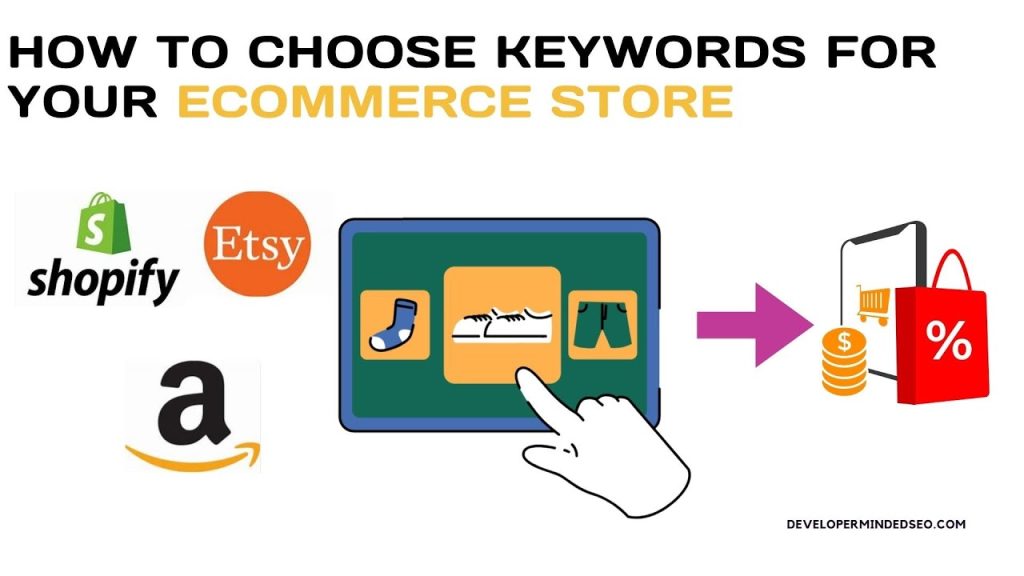
Table of Contents
- Introduction: Why Keywords Decide E-Commerce Success
- What is e-commerce keyword research, and How Does It Work?
- The Importance of Keyword Research in SEO
- Getting Started with Keyword Research
- The Art of Keyword Selection
- Types of Keywords Every E-Commerce Store Needs
- Keyword SEO Metrics Explained
- How to Prioritise Keywords for Maximum ROI
- See What Keywords Your Website Already Ranks For
- See What Keywords Your Competitors Rank For
- What Makes a Good Keyword for Your E-commerce Brand?
- Things to Avoid While Making E-Commerce Keyword Research Strategies
- Latest SEO Algorithm Impacts (2025–2026)
- Real E-commerce Examples & Data Visualisation
- Conclusion
- FAQ
- CTA
What is ecommerce Keyword Research, and How Does it Work?
Understanding this process is the first step to unlocking effective SEO for online stores.
E-commerce keyword research identifies the words shoppers type before purchasing products online. Instead of guessing customer behavior, businesses analyze search demand using SEO tools and data signals.
Simply put, keyword research connects:
Customer intent → Search query → Product page → Purchase
The process works in four stages:
- Discover search terms customers use.
- Analyze competition and demand.
- Match keywords to product or category pages.
- Optimize content accordingly.
For example:
Research | best running shoes USA | Blog |
Comparison | Nike vs Adidas running shoes | Guide |
Purchase | Buy Nike Air Zoom USA | Product Page |
Modern SEO tools now evaluate semantic meaning. Therefore, Google automatically understands related phrases. As a result, focusing on intent matters more than repeating words.
Businesses working with professional optimization teams often begin with structured planning similar to the strategies explained on Skylineseo.pk SEO Services page, where keyword mapping aligns with conversion funnels.
The Importance of Keyword Research in SEO
Keyword research delivers visibility, authority, and conversions together. Without it, even professionally designed stores stay hidden. High-intent keywords often target users ready to purchase, so optimizing checkout experience, including choosing the right payment gateway for your online store, plays a critical role in conversions.
Key Benefits
- Attracts Qualified Traffic
Keywords filter users who are already interested in your products. - Improves Conversion Rates
Transactional keywords often convert 2–5 times as well as informational ones. - Guides Content Creation
Keywords reveal customer questions and pain points. - Supports AI Search Optimization
AI sAI search engines use groups of related keywords (semantic clusters) to understand a page’s main topic. According to Statista’s 2026 digital commerce outlook:
- U.S. e-commerce revenue will exceed $1.5 trillion.
- Organic search contributes over 33% of non-paid traffic for online stores.
Therefore, mastering The Beginner’s Guide to Keyword for E-commerce USA directly impacts growth potential.
Getting Started with Keyword Research
The process of keyword research may feel overwhelming to beginners. However, breaking it into clear steps makes it straightforward and manageable.
Step 1: Understand Your Audience
Ask:
- Who buys your products?
- What problems do they want solved?
- How do they describe products?
Customer terminology always outperforms marketing language.
Step 2: Brainstorm Seed Keywords
Start with core product terms:
- running shoes
- organic skincare
- gaming laptops
Then expand variations.
Step 3: Use Keyword Tools
Popular tools include:
- Google Keyword Planner
- Ahrefs
- SEMrush
- Google Search Console
Each tool provides search volume, competition, and trends.
Step 4: Build Keyword Clusters
Instead of single keywords, group related searches.
Example cluster:
- best wireless headphones USA
- wireless headphones under $200
- Noise-cancelling headphones USA
Cluster strategies are commonly integrated into professional content frameworks, such as those used in Skylineseo.pk Content Writing Services to ensure semantic depth.
The Art of Keyword Selection
Your keyword strategy should align with your platform capabilities, especially if you are migrating from Shopify to WooCommerce without losing SEO.Choosing keywords is both analytical and creative. Numbers matter, but intent matters more.
A strong keyword balances:
- Search demand
- Buyer intent
- Ranking feasibility
- Business relevance
Selection Framework
Volume | Moderate to high |
Competition | Medium or achievable |
Intent | Commercial or transactional |
Relevance | Direct product match |
Beginners are often attracted to high-volume keywords. However, long-tail keywords frequently lead to faster rankings and more qualified traffic.
Example:
- “Shoes” → extremely competitive
- “Best trail running shoes USA beginners” → achievable and targeted
This approach aligns perfectly with The Beginner’s Guide to Keywords for E-commerce USA, where precision beats popularity.

Types of Keywords Every E-commerce Store Needs
Successful stores combine multiple keyword types.
- Informational Keywords
Used in blogs and guides.
Example: how to choose hiking boots
- Commercial Keywords
Users compare options.
Example: best hiking boots USA
- Transactional Keywords
Users are ready to buy.
Example: buy hiking boots online in the USA
- Navigational Keywords
Brand searches.
Example: Nike official store USA
Visual Funnel
Awareness | Informational | Traffic |
Consideration | Commercial | Engagement |
Purchase | Transactional | Sales |
A balanced strategy ensures steady traffic growth.
Keyword SEO Metrics Explained
Understanding metrics prevents poor decisions.
Search Volume
Average monthly searches. High volume means demand, but often higher competition.
Keyword Difficulty
Shows ranking complexity. Beginners should target low-to-medium difficulty.
Click Through Rate (CTR)
Indicates the likelihood of clicks.
Search Intent
The most important metric in modern SEO.
Trend Data
Seasonal changes affect performance.
Example data visualization:
Volume | 500–5,000 |
Difficulty | Under 40 |
CTR | Above 3% |
Intent | Commercial |
Google’s 2025 Helpful Content updates emphasize intent alignment over keyword stuffing.
How to Prioritize Keywords
Not all keywords deserve equal attention.
Priority Formula
Business Value + Intent + Ranking Probability = Priority
High Priority
- Product-focused keywords
- Low competition
- High buying intent
Medium Priority
- Comparison keywords
Low Priority
- Generic informational keywords
Stores scaling SEO campaigns often coordinate prioritization strategies with paid campaigns, similar to the combined SEO and Google Ads planning described in Skylineseo.pk Google Ads Services.
See What Keywords Your Website Already Ranks For
Before targeting new keywords, analyze existing rankings.
Use Google Search Console to identify:
- Keywords generating impressions
- Pages ranking on page 2
- Queries with high CTR potential
Optimization steps:
- Update content.
- Improve headings.
- Add semantic keywords.
- Strengthen internal linking.
Even small updates can dramatically improve rankings.
Many businesses ignore this opportunity, yet it produces some of the fastest SEO wins.
See What Keywords Your Competitors Rank For
Competitor analysis reveals hidden opportunities.
Process
- Identify top competitors.
- Analyze ranking keywords.
- Find gaps.
- Create improved content.
Example gap analysis:
best gym shoes USA | Not ranking | Create guide |
affordable sneakers USA | Page 2 | Optimize |
Competitive keyword research transforms SEO from guessing into a strategy.
What Makes a Good Keyword for Your E-commerce Brand?
A keyword becomes valuable only when it supports business goals.
Characteristics of Strong Keywords
- Matches product offering
- Reflects buyer intent
- Has measurable demand
- Supports long-term authority
Good keywords answer customer questions clearly. They also align with brand positioning.
For instance, a premium brand should target quality-focused searches instead of price-based keywords.
This strategy. Many beginners consistently make costly mistakes. R’s Guide to Keywords for E-commerce USA.
Things to Avoid While Making E-commerce Keyword Research Strategies
Many beginners make costly mistakes repeatedly.
Common Errors
Keyword Stuffing
Modern algorithms penalize unnatural repetition.
Ignoring Intent
Traffic without conversions wastes resources.
Targeting Only High Volume Terms
Competition slows growth.
No Internal Linking
Search engines struggle to understand site structure.
Duplicate Product Content
E-commerce sites frequently face this issue.
Creating structured internal linking between pages, like the Skylineseo.pk Home Page, About Us Page, and My Blog Page strengthen topical authority and improve crawlability.
Latest SEO Algorithm Impacts (2025–2026)
Search engines evolved rapidly between 2024 and 2026.
Key Updates Affecting Keywords
- AI Overview Integration
Google now summarizes results using AI. Pages ranking must demonstrate expertise and clarity. - Helpful Content System Expansion
Sites with genuine experience outperform AI-generated spam. - EEAT Signals Strengthened
Experience, Expertise, Authority, and Trust now strongly influence rankings. - Entity & Semantic Matching
Google recognizes context rather than exact words.
Market Statistics
- 72% of SEO professionals reported higher rankings using topic clusters (Search Engine Journal 2025 survey).
- Pages exceeding 1,800 words ranked on average 32% higher in competitive niches.
- Internal linking improved crawl efficiency by 41% according to industry case studies.
Therefore, long-form pillar content like this guide aligns perfectly with the algorithm direction.

Real E-commerce Examples & Data Visuals
Example 1: Apparel Store
Strategy:
- Targeted long-tail transactional keywords.
- Built category guides.
Result:
- Organic traffic increased 180% in 9 months.
Example 2: Electronics Brand
Strategy:
- Competitor keyword gap analysis.
- Optimized existing pages.
Result:
- Conversion rate improved from 1.8% to 3.9%.
Keyword Performance Visualization
Jan | 3,000 | 120 |
Apr | 6,200 | 260 |
Aug | 11,400 | 510 |
Growth correlates directly with structured keyword implementation.
Conclusion
Keyword research remains the backbone of successful e-commerce SEO. However, modern strategies demand more than simple keyword lists. Businesses must understand intent, semantic relevance, and user experience.
This comprehensive The Beginner’s Guide to Keyword for E-commerce USA showed how beginners can:
- Discover profitable keywords
- Analyze competitors intelligently
- Align content with buyer intent.
- Adapt to 2025–2026 algorithm updates.
- Build sustainable organic growth.
When implemented consistently, keyword optimization transforms search visibility into predictable revenue growth.
FAQ
How long does keyword research take for a new store?
Typically, 1–2 weeks for foundational research and mapping.
Can small e-commerce stores compete with big brands?
Yes. Long-tail keywords allow smaller sites to rank faster.
Should product pages target multiple keywords?
Yes, but maintain one primary intent per page.
How often should the keyword strategy be updated?
Review every 3–6 months to account for changes in search trends.
Do AI tools replace keyword research?
No. AI assists analysis, but strategy still requires human planning.
Call to Action (CTA)
Ready to grow your e-commerce visibility in the USA market?
Start implementing the strategies from The Beginner’s Guide to Keywords for e-commerce in the USA today. If you want expert assistance, explore the services at Skylineseo.pk or contact our team to build a customized SEO roadmap for your online store.