
What Is Generative SEO (GEO)? AI Search in USA
Skylineseo.pk welcomes expert contributors, marketers, SEO professionals, and AI search specialists to share insights on Generative SEO (GEO), AI-powered search, conversational optimization, and the future of digital visibility.
If you have hands-on experience with SEO, AI Overviews, LLM optimization, content strategy, or search innovation, our Digital Marketing Blog program offers a platform to showcase your expertise, build authority, and reach a global audience interested in next-generation search strategies.
By contributing high-quality, data-backed content, you gain exposure, credibility, and contextual relevance in an ecosystem increasingly shaped by AI-driven discovery and generative engines.

Table of Contents
What Is Generative Engine Optimization (GEO)?
Origin of GEO and Its Evolution
Why Generative SEO Matters in the USA
Key Insights & Market Trends
Real-World Applications of GEO
Integrating Traditional SEO with GEO
Measuring GEO & SEO Performance
Three Keys to Success in GEO
Are SEO and GEO Two Sides of the Same Coin?
Conclusion
FAQs
2. Origin of GEO and Its Evolution
The Emergence of GEO
GEO emerged as AI-powered platforms such as ChatGPT, Gemini, Claude, Perplexity, and Bing Copilot became primary tools for information discovery. Users increasingly prefer instant, conversational answers over navigating multiple web pages.
This change created the need for optimization strategies designed specifically for AI discovery and synthesis, leading to the development of Generative Engine Optimization.
How GEO Builds on Traditional SEO
GEO does not replace SEO—it evolves from it. While traditional SEO builds authority through technical performance and backlinks, GEO focuses on:
Context
Semantic clarity
Trust signals
AI readability
How GEO Works
To optimize for GEO:
Structure content clearly with headings, definitions, and concise explanations
Provide context, not just keywords
Use credible data and sources to build trust
Write conversationally, mirroring how users ask questions
Establish entity consistency for brands and authors
In the U.S. market—where AI search adoption is accelerating—early GEO adoption creates a significant competitive advantage.
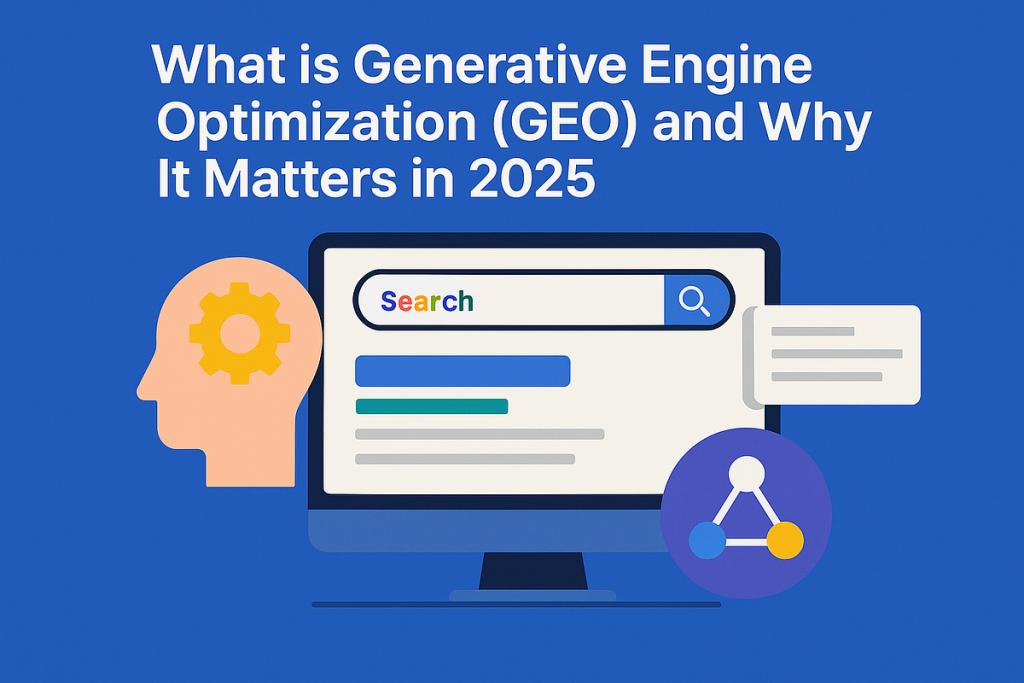
3. Why Generative SEO Matters in the USA
Generative SEO matters because search behavior is changing rapidly:
A growing share of searches now return direct AI-generated answers
Zero-click searches continue to rise
AI assistants are becoming primary discovery tools across devices and workplaces
For U.S.-based businesses, relying only on traditional SEO increasingly limits visibility. If AI engines cannot understand or trust your content, it may never surface—regardless of rankings.
As AI-powered search expands across enterprise tools, mobile devices, and voice assistants, GEO ensures your brand remains visible where users are actually searching.
4. Key Insights & Market Trends (2025–2026)
Growth of AI Search
Industry-wide analyses from multiple research and analytics sources (2024–2025) indicate:
AI-powered platforms such as ChatGPT reached hundreds of millions of weekly users, positioning them as major search interfaces
Referral traffic from AI tools increased several-fold year over year
In the U.S., AI-powered search accounted for a growing share of desktop and mobile discovery activity
Impact on Click-Through Rates
AI summaries and overviews increasingly appear in search results
When AI answers are shown, traditional SERP click-through rates often decline significantly
Zero-click behavior now represents more than half of many informational searches
Adoption by Marketers
Over half of marketing teams report using generative AI in SEO workflows
Most SEO professionals expect AI to significantly reshape roles and strategies
Enterprise adoption of AI-powered SEO tools continues to accelerate
Key Takeaway
The data clearly shows that AI-driven discovery is no longer experimental. Content optimized for AI visibility increasingly outperforms content optimized only for traditional rankings.
5. Real-World Applications of GEO
Businesses are already using GEO to:
Influence AI-generated answers in their industry
Strengthen brand authority through AI citations
Attract higher-intent users from AI-driven discovery
Track AI visibility using citation and mention metrics
In AI environments, a brand mention inside an answer functions like a high-trust endorsement, often influencing decisions earlier in the buyer journey.
6. Integrating Traditional SEO with GEO
Traditional SEO and GEO work best when combined.
Traditional SEO Strengths
Organic traffic from search engines
Backlink authority
Technical optimization
Keyword targeting
GEO Strengths
Inclusion in AI-generated answers
Conversational relevance
Contextual authority
AI citation visibility
A Blended Strategy
Maintain strong technical SEO foundations
Add AI-friendly structures (clear answers, schema, entities)
Track both rankings and AI mentions
Use long-form content for depth and Q&A blocks for AI extraction
Write naturally, matching conversational search behavior
This blended approach ensures visibility across both traditional search and AI-first discovery.
7. How to Measure GEO & SEO Performance
Traditional SEO Metrics
Keyword rankings
Organic traffic
Backlink quality
GEO Metrics
Traditional SEO Metrics
- Rankings: SERP position for target keywords
- Organic Traffic: Sessions from search engines
- Backlinks: Quality and quantity of external links
AI citation frequency
Share of AI voice
Conversational mentions
Conversion attribution from AI touchpoints
Tracking both sets of metrics provides a complete view of modern search performance.
8. Three Keys to Success in GEO
1. Structure Content for AI
Use clear headings, concise definitions, and logically organized sections.
2. Build Trust and Authority
AI engines prioritize credibility. Include data, expert insights, and verifiable information.
3. Monitor and Improve
Continuously analyze rankings, AI visibility, and conversions to refine your strategy.

9. Are SEO and GEO Two Sides of the Same Coin?
Yes—with different priorities.
| SEO | GEO |
|---|---|
| Focuses on rankings | Focuses on AI inclusion |
| Keyword-driven | Context-driven |
| Backlinks matter | Trust and structure matter |
| SERP listings | Conversational answers |
Success in 2025–2026 requires both.
Conclusion
As we move through 2025 and into 2026, search is no longer limited to traditional engines. Generative SEO and GEO are now essential, particularly in AI-forward markets like the United States.
By combining strong SEO fundamentals with GEO strategies, businesses can future-proof their visibility—not just by ranking, but by being included in the answers users trust most.
Frequently Asked Questions
- How is GEO changing traditional search?
GEO shifts visibility from ranked links to AI-generated answers, making content inclusion more important than rankings alone.
2. Is SEO still important for GEO?
Yes. SEO establishes authority, which AI systems rely on when selecting sources.
3. Do I need special tools for GEO?
Tools help, but GEO can begin with clear structure, direct answers, and authority signals.
4. When should marketers start GEO optimization?
Immediately. AI search adoption is already widespread, and early movers gain long-term advantages.
Call to Action
Willing to Boost Your Visibility in AI Search?
Whether you want to rank higher in traditional search or be included directly in AI-generated answers, do write for Skylineseo.pk, where our team helps you build a future-ready SEO + GEO strategy.
From Generative SEO audits to AI-optimized content and entity authority building, we help brands stay visible where modern users actually search.
Contact us today to get a personalized SEO & GEO roadmap and discover how your brand can win visibility across Google, AI Overviews, ChatGPT, and other AI-driven platforms.